Iron Deficiency: What to Eat to Naturally Increase Your Iron Intake
By the Matcha Matcha team
Contents 9 portions
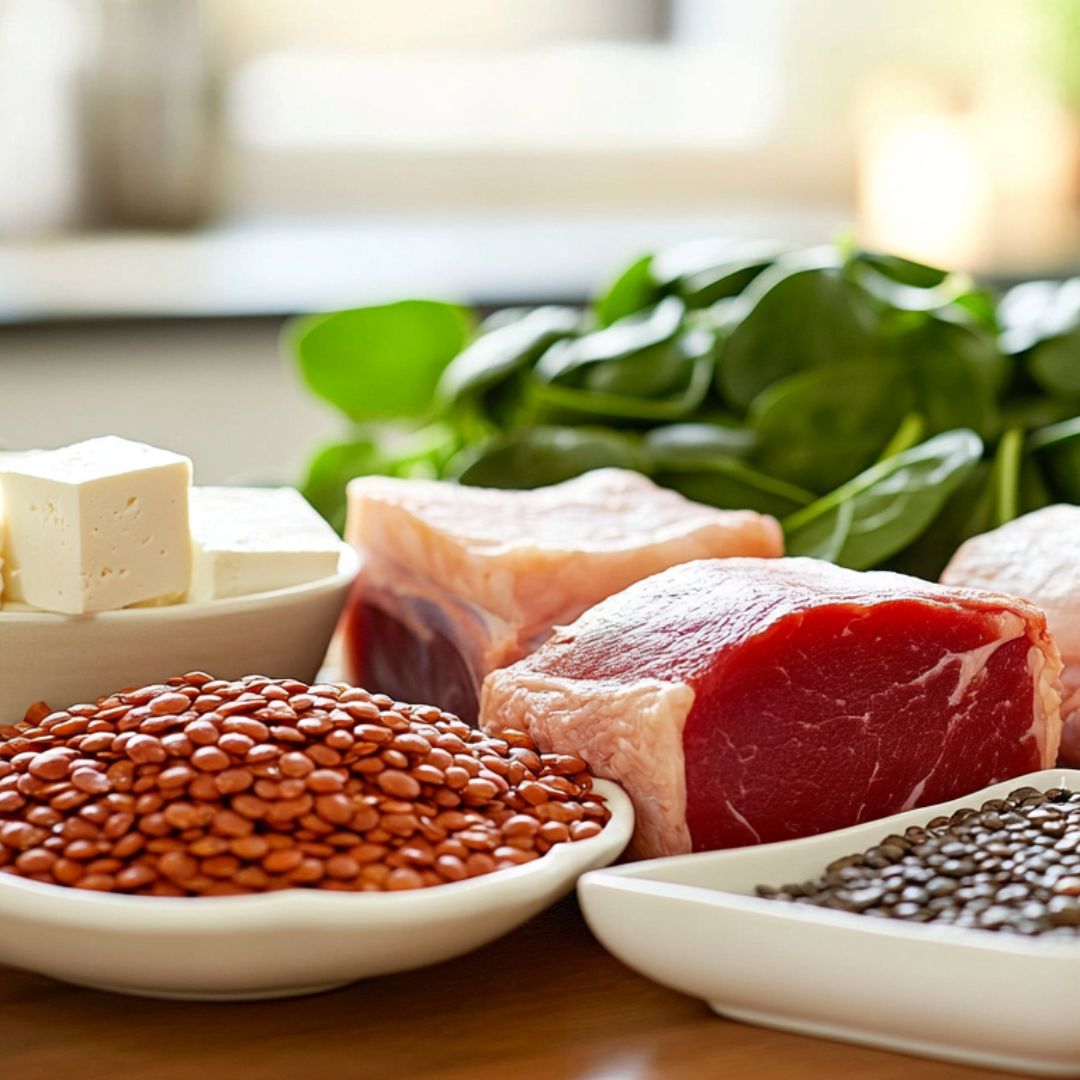
Iron is an essential mineral for oxygen transport, energy production, and healthy immune function. Yet iron deficiency affects millions of people worldwide, leading to fatigue, dizziness, and anaemia. Below, discover the best dietary sources of iron, how to improve absorption, and a gentle boost with our organic ceremonial matcha.
Reading time: 13 minutes
What is iron, and why is it so important?
Iron is essential for making haemoglobin, the protein in red blood cells that carries oxygen throughout the body. It also supports energy metabolism and helps maintain your natural defences. Long-term deficiency may lead to iron-deficiency anaemia, with low energy, muscle weakness, and reduced concentration.
Needs & signs of deficiency
Daily iron requirements
Adult men typically need around 8 mg/day, premenopausal women around 18 mg/day, and up to 27 mg/day during pregnancy to support foetal growth and increased blood volume.
Common symptoms of iron deficiency
Persistent fatigue, pale skin, shortness of breath, palpitations, and pica (craving non-food substances) can all point to insufficient iron intake.
Types of iron in food
Heme iron
Found in meat, fish, and poultry, heme iron is absorbed at around 15–35%, making it the most efficient form for replenishing low iron levels.
Non-heme iron
Found in plant foods (legumes, leafy greens, grains), non-heme iron is absorbed at roughly 2–20%. Absorption improves when it’s eaten alongside vitamin C.
The best dietary sources of iron
1. Red meat
Beef and lamb provide around 2.7 mg of iron per 100 g (about 15% of daily needs). Keep it to 1–2 servings per week to balance iron intake with saturated fat.
2. Liver & organ meats
Beef liver can contain up to 6.2 mg/100 g (around 34% of daily needs). Rich in B12 and copper, it should still be eaten in moderation, especially during pregnancy.
3. Legumes
Lentils and chickpeas can provide roughly 6–9 mg per cooked serving (about 30–50%). High in fibre and protein, they’re ideal for vegetarian diets.
4. Leafy green vegetables
Cooked spinach can reach about 6.4 mg/100 g (around 36%). Add a squeeze of lemon (vitamin C) to support absorption.
5. Seafood
Oysters and mussels contain around 7 mg/100 g (about 40%). They also provide zinc, which supports immune health.
6. Tofu & soy foods
Tofu offers around 5.4 mg/100 g (about 30%). It’s easy to add to stir-fries, bowls, and smoothies for variety.
7. Fortified cereals
Some cereals can provide a large portion of the daily reference intake. Choose low-sugar options and pair with fibre-rich foods for a balanced breakfast.
8. Seeds & nuts
Pumpkin seeds provide around 2.5 mg per 30 g (about 14%). Almonds, cashews, and sunflower seeds make excellent iron-rich snacks.
9. Dark chocolate
Dark chocolate (70% cacao) can provide around 11.9 mg/100 g (about 66%). Enjoy in moderation due to sugar and calories.
Iron in foods: comparison table
| Food | Iron (mg/100 g) | RI (%) |
|---|---|---|
| Beef liver | 6.2 | 34% |
| Cooked lentils | 6.6 | 37% |
| Cooked spinach | 6.4 | 36% |
| Oysters | 7.0 | 40% |
| Dark chocolate (70%) | 11.9 | 66% |
| Tofu | 5.4 | 30% |
How to improve iron absorption
Pair iron with vitamin C
For non-heme iron, combine legumes and leafy greens with citrus, fresh peppers, or berries to help maximise absorption.
Avoid common inhibitors
Try not to have tea, coffee, or calcium-rich dairy at the same time as iron-rich meals, as compounds like tannins and calcium may reduce absorption.
Cookware tip: cast iron
Cooking in a cast-iron pan can slightly increase the iron content of foods, especially acidic ingredients like tomatoes.
Matcha and iron: what to know
Matcha naturally contains non-heme iron and antioxidants. If you’re focusing on iron, it’s best to enjoy matcha between meals rather than right alongside your most iron-rich plate, as tea compounds may reduce iron absorption in some people.
Iron-rich recipe ideas
Lentil & spinach salad
Combine cooked lentils, baby spinach, orange segments, and a lemon vinaigrette — a fresh combo that pairs plant iron with vitamin C.
Chickpea tagine
Chickpeas simmered with spices, tomatoes, and peppers: a comforting, iron-rich meal with plenty of antioxidants.
Matcha-tofu smoothie
Blend 1 g of matcha with 100 g silken tofu, kiwi, and spinach for a smoothie with plant protein and micronutrients.
Matcha as a gentle daily ally
Our Organic Ceremonial Matcha offers L-theanine and naturally occurring antioxidants — ideal when you want steady energy, without the coffee crash.

Advice & precautions
Keep an eye on your intake: excess iron (especially heme iron) can be harmful. If you suspect deficiency, consider a blood test before starting supplements or a very high-iron diet.